The NBA season is long, fast and full of drama. It runs for about eight months and includes a regular season, a cup, a play-in tournament and the playoffs. If that sounds confusing, don’t worry. This guide explains the NBA season format step by step, so you can follow every stage with confidence.
NBA season format: teams, conferences and divisions
The NBA has 30 teams. It splits them into two conferences, the Eastern Conference and the Western Conference, with 15 teams each. Then each conference divides again into three divisions of five teams.
The conferences matter most, because they decide the playoff picture. For example, a team from the East only meets a team from the West in the NBA Finals.
The regular season
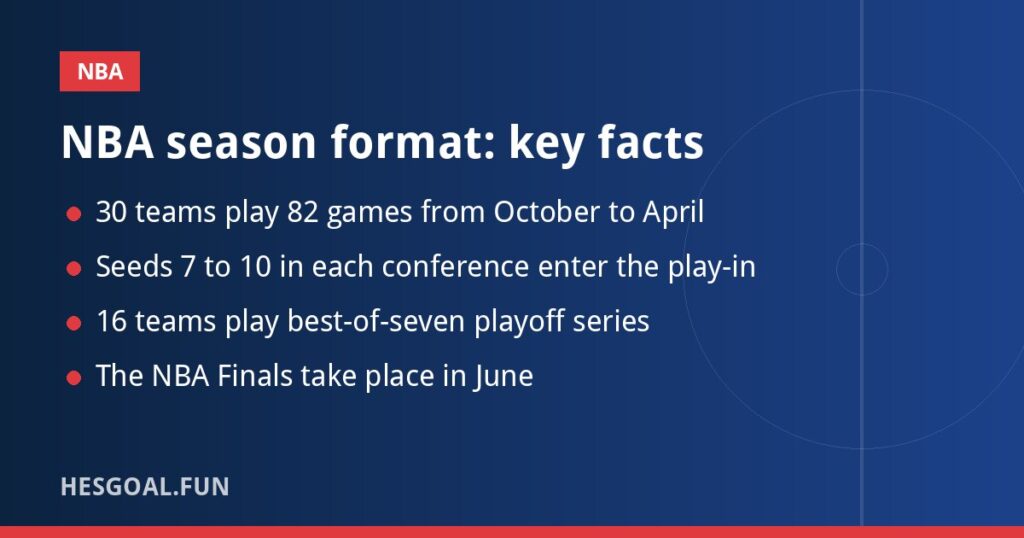
The regular season is the longest part of the NBA season format. It usually starts in late October and ends in mid-April. During that time, every team plays 82 games: 41 at home and 41 on the road.
Teams face opponents from their own division most often. However, every team also plays every team from the other conference at least twice. As a result, fans in every city get to see the league’s biggest stars at least once a season.
In the middle of the season, the league takes a short break for the All-Star Game in February. The trade deadline also falls in February. After that date, teams can no longer trade players with each other.
The NBA Cup
In 2023, the league added a new in-season tournament to the NBA season format. Fans now know it as the NBA Cup.
The group games take place in November, and they count toward the regular season record. Then the best teams move on to a knockout round in December. The final decides the cup winner, but that one game does not count in the standings. Players on the winning team also earn extra prize money.
The play-in tournament
When the regular season ends, the top six teams in each conference go straight to the playoffs. The teams in 7th to 10th place then enter the play-in tournament. It works like this:
- The 7th and 8th teams play each other. The winner takes the 7th seed.
- The 9th and 10th teams play each other. The loser goes home.
- The loser of the 7 vs 8 game then plays the winner of the 9 vs 10 game. The winner of that game takes the 8th seed.
The NBA made the play-in a permanent part of the NBA season format in 2021. Since then, more teams stay in the race until the final weeks. So fewer teams give up early, and more games matter in March and April.
The playoffs: the heart of the NBA season format
The playoffs start in mid-April with 16 teams, eight from each conference. The top seed plays the 8th seed, the 2nd seed plays the 7th seed, and so on.
Every round is a best-of-seven series. So the first team to win four games moves on. There are four rounds in total:
- First round
- Conference semi-finals
- Conference finals
- NBA Finals
The team with the better regular season record gets home-court advantage. That means it hosts games one, two, five and seven. Because game seven can decide a whole season, home court matters a lot.
The NBA Finals
The NBA Finals take place in June. Here, the champion of the East meets the champion of the West. The winners lift the Larry O’Brien Trophy, while the best player of the series wins the Finals MVP award.
After the season: the draft
The NBA season format does not stop with the Finals. In late June, the league holds the NBA Draft. The 14 teams that missed the playoffs enter a lottery for the top picks. This gives weaker teams a chance to sign the best young talent and rebuild.
NBA season format: a quick recap
In short, the NBA season format goes like this: 82 regular season games, the NBA Cup in November and December, the play-in, four rounds of playoffs, and the Finals in June. For official schedules and standings, visit NBA.com. Then check out the greatest records in basketball history, or explore more basketball guides.